Debunking Common Myths About Commercial Construction Projects


Myth 1: Commercial Construction Projects Always Go Over Budget
One of the most persistent myths about commercial construction is that projects invariably exceed their budgets. This misconception often stems from high-profile cases where costs have spiraled out of control. However, with proper planning, accurate cost estimation, and effective project management, it is entirely possible to stay within budget.
Modern construction management practices employ advanced software tools to track expenses in real-time, allowing for adjustments as needed. Additionally, transparent communication between stakeholders can prevent unexpected financial surprises.

Myth 2: Construction Projects Always Run Late
Delays in construction projects can happen, but they are not inevitable. Factors like weather, unforeseen site conditions, or supply chain disruptions can contribute to delays, yet these can often be mitigated with proactive planning.
Project managers use detailed schedules and contingency plans to keep projects on track. Regular progress meetings and efficient coordination among teams further ensure timelines are met.
Myth 3: Sustainable Construction Is Too Expensive
There is a growing belief that incorporating sustainability into commercial construction is prohibitively expensive. In reality, while initial costs might be higher, sustainable practices can lead to significant long-term savings.
Green buildings often enjoy reduced energy and water costs, enhanced employee productivity, and increased property value. Investment in energy-efficient systems and sustainable materials pays off over time.

Myth 4: Commercial Projects Are Disruptive to the Community
Many people assume that commercial construction projects cause major disruptions, such as noise and traffic congestion. While some impact is inevitable, careful project planning can minimize these effects.
Construction companies often coordinate with local authorities and communities to schedule work during less disruptive times and implement noise-reducing techniques. Effective communication with the public can also alleviate concerns.
Myth 5: All Construction Projects Are the Same
Another common misconception is that all commercial construction projects are alike. In truth, each project is unique, with its own set of challenges and requirements. Factors such as location, purpose, size, and design can significantly influence the approach taken.
Successful projects rely on customized solutions tailored to specific needs, rather than a one-size-fits-all approach. This adaptability is key to overcoming challenges and achieving project goals.
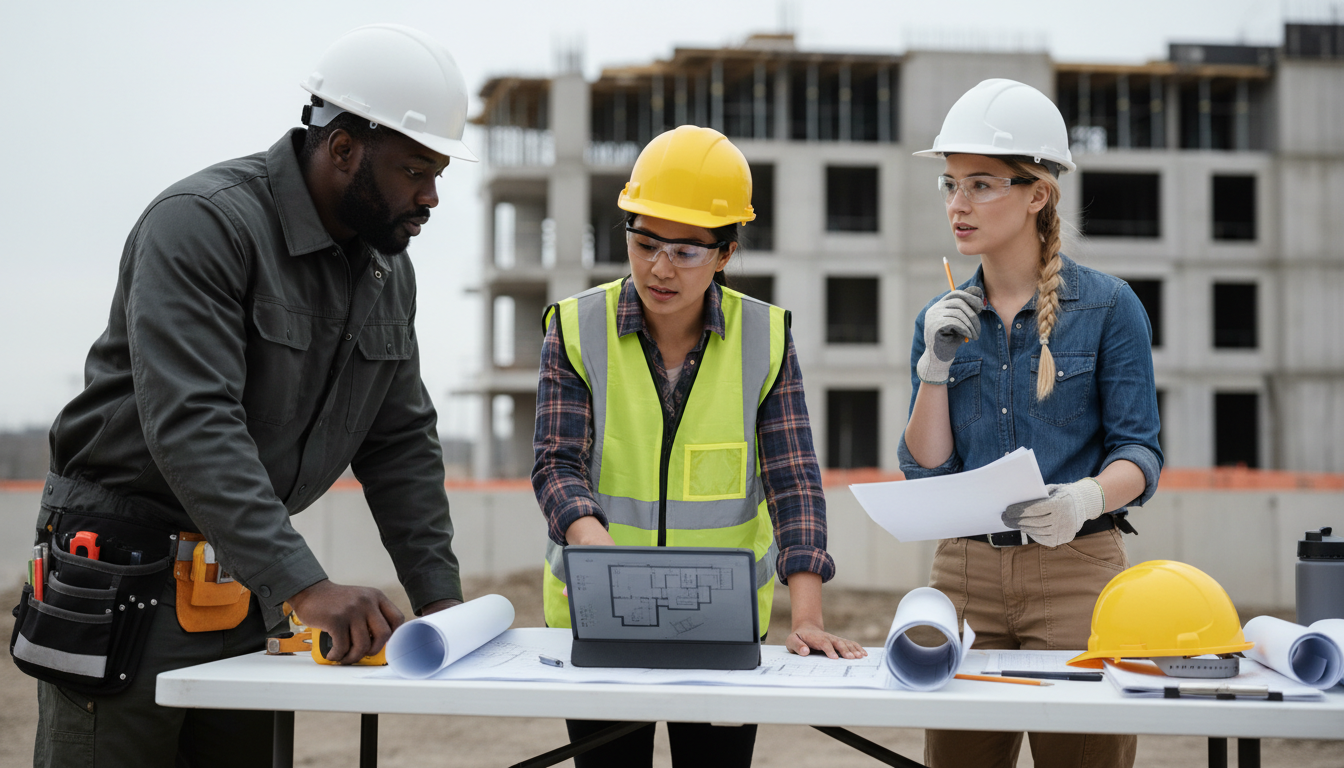
Myth 6: Technology in Construction Is Unnecessary
Some believe that traditional methods are sufficient for construction projects, dismissing the need for modern technology. However, technology plays a crucial role in enhancing efficiency and accuracy.
From Building Information Modeling (BIM) to drones and augmented reality, technology facilitates better design, planning, and execution. Embracing these tools can lead to improved project outcomes and satisfaction.
Conclusion
Debunking these myths highlights the importance of informed perspectives on commercial construction. By understanding the realities, stakeholders can make better decisions, ensuring projects are completed on time, within budget, and to the highest standards.